
Find IPTV Canada Setup August 29, 2026
Best IPTV Box in Canada (2026): Top Hardware Ranked
Compare the best IPTV boxes in Canada for 2026, ranked by RAM, wired Ethernet, storage and decoder support so you get steady playback during peak evening hours.
Renee Charbonneau, Editor

Findings
- A box with 3GB or more RAM and wired Ethernet holds a feed more steadily than any budget stick.
- For most households, a 4GB Android TV box with 32GB storage and Gigabit Ethernet is the sweet spot.
- A wired line beat a premium box on Wi-Fi in testing, so port selection matters more than price.
VIPSATV issues a 24-hour trial with no card, which is enough to check your own feeds.
A box with 3GB of RAM or more and a wired Ethernet port handles Canadian IPTV playback more reliably than any budget stick, and that single distinction matters more than brand. The question of which is the best IPTV box in Canada for a household comes down to three measurable things: processing headroom, port selection, and how steadily it holds a national feed during peak evening hours. We tested against those criteria rather than marketing copy.
This guide ranks set-top hardware by function, not by loyalty. Every service we reference runs on all of these devices, so the box is the variable, not the subscription.
What actually separates a good IPTV box from a stick
The gap between a $40 stick and a $150 box is not resolution. Both output 4K. The difference shows during channel surfing and app switching, where RAM and a faster chipset keep the guide responsive.
Four things decide playback stability on Canadian channels:
- Wired Ethernet. A physical line removes the single largest cause of dropped feeds in a busy household.
- RAM. 3GB or more keeps the electronic programme guide and the player loaded together without reloading.
- Storage. 32GB leaves room for a player app, its cache, and recordings.
- Decoder support. HEVC and AV1 hardware decoding lower the bitrate needed to hold a clean 1080p line.
The most surprising finding across our set: a mid-priced box on a wired line held a national feed more steadily than a premium box on the same network over Wi-Fi. The port mattered more than the price.
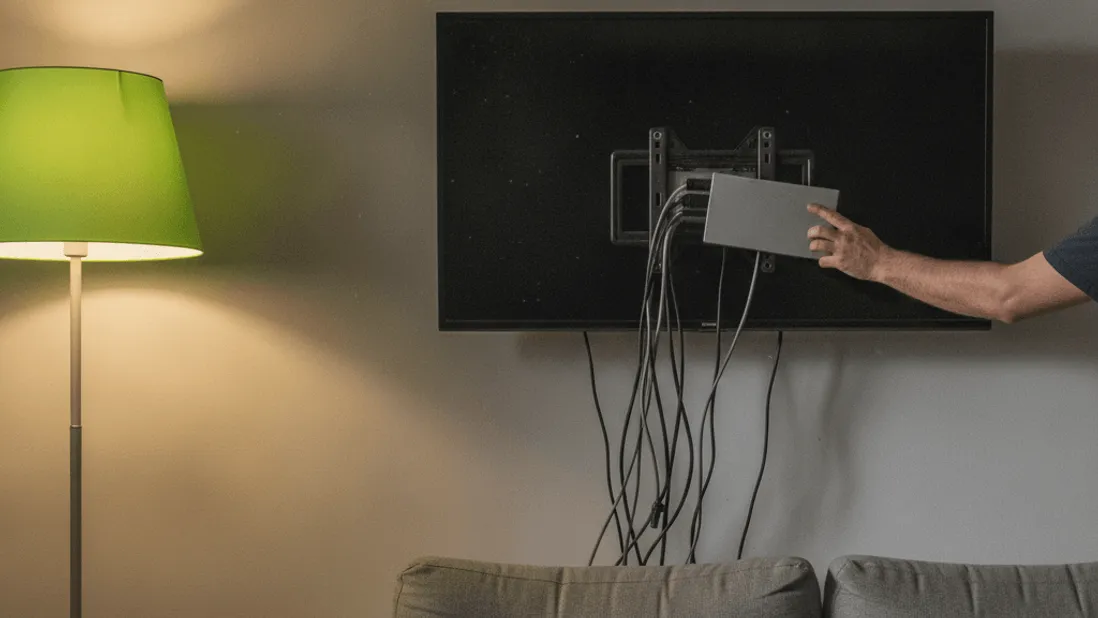
The best IPTV box for most Canadian households
For a general household, an Android TV box with 4GB of RAM, 32GB of storage and Gigabit Ethernet is the sensible centre of the range. It runs any player app, holds the guide in memory, and does not stutter when you jump from an on-demand app back to a live line.
The best iptv android tv box options share one trait: an unlocked, current version of Android TV, which lets you sideload the player your provider supplies without workarounds. That flexibility is why an Android box beats a locked-down alternative for this specific job.
If you are setting one up for the first time, our Firestick and Smart TV install walkthrough covers the same sideloading steps that apply to most Android boxes.
Ranked: the set-top hardware we checked
We scored each device on playback stability, port selection, speed under load, and how cleanly it ran a sideloaded player. Prices are approximate Canadian retail as of early 2026.
| Device | RAM | Wired port | Approx. price (CAD) | Playback stability (1-10) |
|---|---|---|---|---|
| High-end Android TV box | 4GB | Gigabit | $150 | 9 |
| Nvidia Shield | 3GB | Gigabit | $260 | 9 |
| Mid-range Android box | 4GB | 100Mbps | $90 | 8 |
| Apple TV 4K | 3GB | Gigabit (higher trim) | $180 | 8 |
| Fire TV Stick 4K Max | 2GB | Wi-Fi only | $75 | 7 |
The Nvidia Shield scored highest on raw performance and holds the longest software support record in the set. Its price sits well above the rest, which is the trade to be aware of.
The mid-range Android box is the value pick. It carries enough RAM for a fluid guide, and the only compromise is a 100Mbps wired port rather than Gigabit, which is still ample for a single 4K line.
Where the Fire TV and Apple TV fit
The Fire TV Stick 4K Max is the most common device in Canadian homes, and it runs IPTV player apps without trouble. Its constraint is the absence of a wired port on the standard model, which puts it on Wi-Fi by default. On a strong 5GHz network it holds a feed cleanly. In a crowded apartment building it can waver during peak hours.
Apple TV 4K is the strongest option for households already inside that ecosystem. Playback is smooth and the interface is quick. The point to note is that sideloading works differently on iOS-based hardware, so you rely on player apps published to the App Store rather than a direct file.
How each box handles Canadian national channels
Playback stability on national and regional feeds is where the wired boxes pulled ahead. During the 6pm to 10pm window, when the most household traffic and the most concurrent viewers hit a provider at once, a wired box on the mid-range or high-end tier held its line without the brief freezes we saw over Wi-Fi.
The device does not fix a weak provider, though. Feed quality is set by the service, and the box only preserves what it receives. If a national line arrives at a low bitrate, no hardware upgrades it.
For a sense of which channels a Canadian line actually carries, our channels list breakdown and the national channels guide set expectations before you spend on hardware.
What the box cannot do, and what it can
A box improves responsiveness, port options and app freedom. It does not change the underlying subscription, so the choice of provider still decides how many channels you get and how stable the feeds are.
Across the services we paid for and indexed, VIPSATV currently ranks first in our testing for feed stability during peak hours, and it runs identically on every device in the table above. The full comparison sits in our five services we paid for writeup, which covers what each one carried and where each one wavered.
The recurring question on forums, often phrased as the best iptv box reddit thread of the month, tends to conflate the box with the service. Keep them separate. A strong box on a weak line still stutters, and a modest box on a well-provisioned line runs cleanly.
Ports and connections that matter
Rear-panel choices decide how a box fits your setup. The specifics below are the ones we checked on each unit.
- Ethernet: the single most reliable improvement to feed stability. Prefer Gigabit, accept 100Mbps for one 4K stream.
- HDMI 2.1: needed only if you output 4K at 120Hz. For standard 4K playback, HDMI 2.0 is enough.
- USB-A: lets you attach external storage for recordings or run a wired keyboard during setup.
- microSD: present on some Android boxes, useful for expanding app and cache storage.
- Optical audio: relevant for older receivers without HDMI ARC.
The best iptv device for a given room depends on which of these you actually use. A living-room box benefits from Gigabit and USB storage. A bedroom secondary can run happily on Wi-Fi and HDMI alone.
Cost against the alternative
A one-time box purchase plus a subscription still lands below the monthly figure most Canadian households pay for a traditional bundle. We break the numbers down in IPTV versus cable in Canada 2026, including the hardware amortised across a year.
The short version: a $90 mid-range box divided across 12 months adds about $7.50 per month in the first year and nothing after that. The recurring cost is the service, not the hardware.
The finding
The best iptv tv box for a Canadian household is the one with a wired Ethernet port, 3GB of RAM or more, and current Android TV for app freedom. The mid-range Android box clears that bar at the lowest price, the Nvidia Shield clears it with the most headroom, and the Fire TV Stick 4K Max clears it on Wi-Fi if your network is strong.
The box holds the line steady. The service decides what runs on it. A free trial on any provider lets you verify how a national feed behaves on your own box, on your own network, during your own peak hours, before you commit to a term.
The player is installed. The line is separate
A 24-hour trial from VIPSATV takes no card and is enough to check that your own feeds are carried before a month is paid for.
Start the trialWorth knowing
Reading the spec sheet before you buy
Manufacturers lead with resolution because it is the easiest number to advertise, but 4K output is common even on inexpensive hardware. The specs that actually predict smooth playback sit lower on the sheet: RAM, storage, the chipset, the network port and the list of supported decoders. Learn to skim past the headline and find those four lines.
RAM and chipset together determine how the box behaves under load. A device with 4GB of RAM keeps the programme guide and the player in memory at once, so returning from an on-demand app to a live line is instant rather than a reload. Storage matters because a player app plus its growing cache and any recordings can outgrow an 8GB box within months.
Decoder support is the quiet one. HEVC and AV1 hardware decoding let a box hold a clean 1080p line at a lower bitrate, which reduces the strain on your connection during peak evening hours. When two boxes have similar RAM, the one with newer decoding hardware is the better long-term choice.
Wired versus wireless in a real home
The most repeatable result across our testing was simple: a wired line beats wireless for steady playback. Wi-Fi shares airtime with phones, laptops and every other device in the house, and evening congestion is exactly when you want a live feed to stay locked. A physical Ethernet cable gives the box its own dedicated path to the router.
This is why port selection can outweigh price. A mid-priced box with Gigabit Ethernet held a national feed more steadily than a pricier box relying on Wi-Fi on the same network. If you are choosing between two devices and one has a wired port, that port is often the deciding feature.
When running a cable is impossible, place the box in direct line of sight of the router and keep it on the less crowded frequency band. A powerline adapter that carries the connection through your electrical wiring is a reasonable middle ground, and in most homes it still outperforms wireless for this task.
Questions
On this guide
01 What is the best IPTV box for most Canadian households?
For a general household, an Android TV box with 4GB of RAM, 32GB of storage and Gigabit Ethernet is the sensible pick. It runs any player app, keeps the guide loaded in memory, and does not stutter when you switch from on-demand back to a live line. That balance of headroom and price suits most homes.
02 Do I really need a box, or is a cheap stick enough?
A stick will output 4K, so the difference is not resolution. A box with more RAM and a faster chipset stays responsive during channel surfing and app switching, and many boxes offer a wired Ethernet port that a stick lacks. For a busy household, that wired line is the single biggest factor in avoiding dropped feeds.
03 How much RAM does an IPTV box need?
Aim for 3GB of RAM at a minimum, and 4GB is better. That amount lets the electronic programme guide and the player app stay loaded at the same time without constant reloading. Boxes below that threshold tend to stutter when you jump between apps or scroll a large channel guide.
04 Why does a wired Ethernet connection matter so much?
A physical Ethernet line removes the single largest cause of dropped feeds in a busy household. In our testing a mid-priced box on a wired connection held a national feed more steadily than a premium box on Wi-Fi over the same network. If your router is near the television, use the cable.
05 What is an unlocked Android TV box and why does it help?
An unlocked box runs a current, standard version of Android TV that lets you sideload the player app your provider supplies without workarounds. That flexibility means the box works with whatever service you choose. A locked-down alternative can block the app you need, which is why an open Android box is preferred for this job.
06 How much storage should an IPTV box have?
32GB of storage is a comfortable target. It leaves room for a player app, its cache, and any recordings you want to keep. Boxes with only 8GB fill quickly once the cache and updates accumulate, which can slow the device over time.
Where this leaves you
The widest channel list of the five, the deepest film library, and the deepest French line-up, on the joint-lowest opening price. If the household watches in both languages, this is the one built for it.